
How Berkeley Residents Are Found
A useful Berkeley residents directory search begins with the clue already in hand. An address points toward the Alameda County property search and the Berkeley GIS parcel map. A person’s name may lead to the recorder’s party index, a court case, a professional license, or an obituary. A past household is more likely to appear in a city directory, census schedule, yearbook, or newspaper than in a current roll. The records answer different questions, so the first result is a lead rather than a final identity match.
Start with a source that can be checked without guessing. Property and tax tools connect an address or APN to parcel facts, but they do not establish who occupies a dwelling. Deeds identify parties to recorded transfers. A voter status account lets a person authenticate their own registration, not browse a Berkeley street. Historical directories show a listed subscriber or occupant, not every member of a household. Treating those distinctions as part of the search keeps the directory useful for family history, reconnecting, estate work, and civic research.
- Write down the known name, address, date, APN, spouse, middle initial, or document clue.
- Use Alameda property or Berkeley GIS tools to validate an address and parcel relationship.
- Move from a parcel lead to the recorder’s party index when ownership history matters.
- Use the proper authenticated, historical, court, vital, or license source for the person question.
- Ask the custodian, library, archive, or city records program when an online index stops.
Where Berkeley Resident Records Live
Berkeley’s record geography is split across the city, Alameda County, and California. The City Clerk at 2180 Milvia Street manages city records, elections, filings, and the records program. The county Recorder and Assessor are centered in Oakland. The state handles statewide vital, voter, licensing, and confidentiality systems. That split explains why a Berkeley residents directory is a set of linked trails rather than a single government list.
These offices are the practical starting points. The county Recorder holds deeds, liens, maps, and other official records. The property search is address or APN first. The state voter tool is an authenticated self-lookup. City permit, planning, police, and administrative records stay with Berkeley, while the Public Library History Room supplies the strongest offline directory shelf.
Alameda County Recorder
1106 Madison Street
Oakland, CA 94607
(510) 272-6362
Official Public Records
Alameda County Assessor
Address and APN search
Owner-name mode not displayed
Lobby access 9-4:30
Alameda Property Search
California Elections
Authenticated self-lookup
Qualified files by application
Purpose limits apply
My Voter Status
Berkeley public-records access information locates the municipal records program that sits beside the county and state systems.
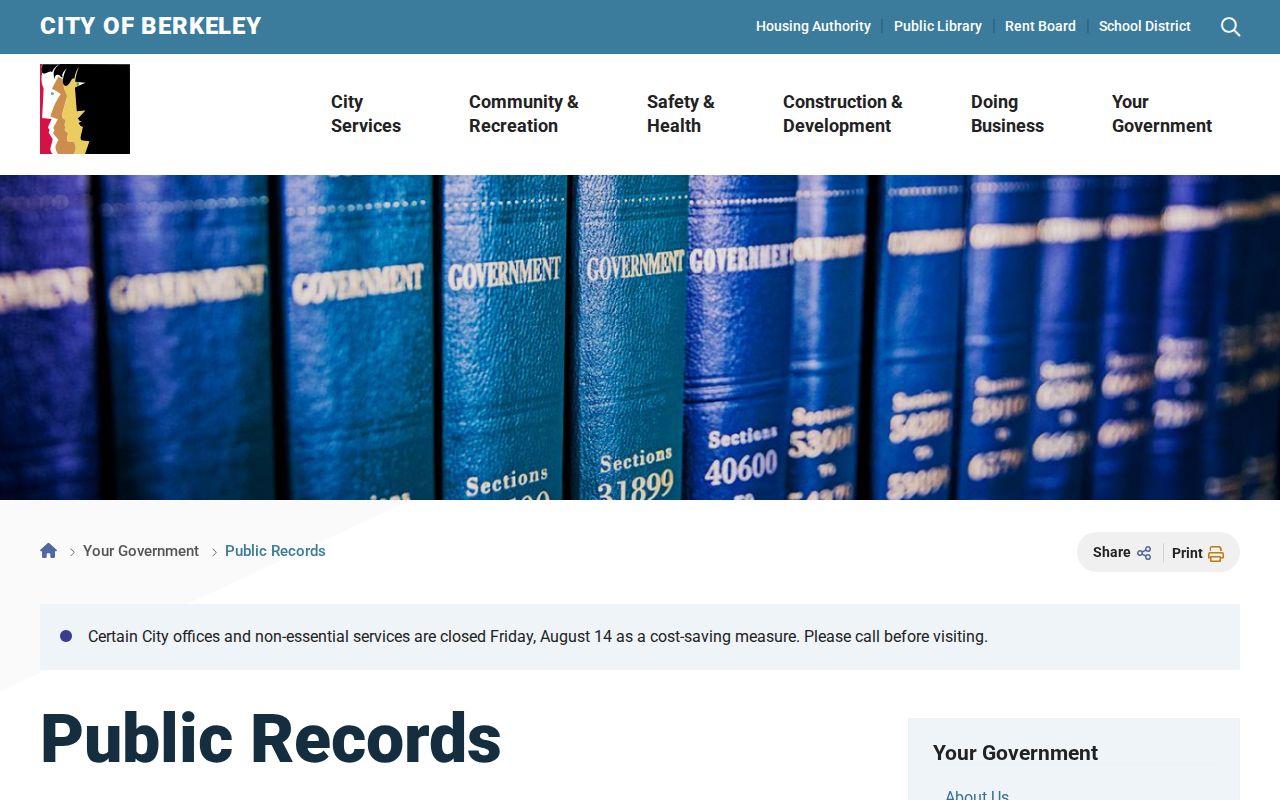
The city office is the right channel for municipal records, while county and state custodians handle the identity-bearing sources listed above.
Note: Oakland is Alameda County’s seat, so county counter research for Berkeley generally points away from the city.
Berkeley’s Address-First Property Search
The Alameda County Property Search is a key Berkeley residents directory lead because it starts with a property, not a person. Its public modes show a parcel-number field, a type-ahead address selector, and a property-address search. The inspected interface did not show a public owner-name field. That limitation matters: a name cannot simply be typed into the assessor tool to produce a citywide list.
Use the property result to preserve the APN, situs address, mailing address, use or class information, latest document date, and other parcel facts. A situs address identifies the place the parcel serves. A mailing address identifies where tax material goes. Neither one proves who lives at the property. The county tax search is another address or APN route, and the Berkeley GIS portal can connect the parcel to planning and building layers.
| Parcel Number | Text or parcel mode; an example format is 123-345-67. |
|---|---|
| Type Ahead Address | Autocomplete; select the offered address suggestion. |
| Property Address | Address-first search mode for a parcel lead. |
| Search and Reset | Controls only; no public owner-name field was shown. |
That design is an important Berkeley-specific lesson. A parcel can take the search to a deed, permit, or old directory, but it cannot turn a public property record into an occupancy list. The address trail is strongest when each later record is checked against its own custodian.
Berkeley’s 1969 Recorder Cutoff
Alameda County official records date to 1853, yet the electronic deed index begins in 1969. For 1969 to the present, the Recorder’s official-records page supplies the modern index path. For 1853 through 1968, the grantor and grantee indexes require in-person microfilm work at the Clerk-Recorder. A failed online search is therefore not evidence that an older Berkeley deed never existed.
The Recorder’s alphabetic index is organized by party name, not by street or APN. An instrument number, book and page, or reel and image reference helps with a copy request. Plain copies are listed at $3.50 per page; certified copies are $4.50 for the first page and $3.50 for each additional page. Mail orders generally take 5 to 10 business days, while large in-person orders may take 1 to 3 business days. The office does not conduct lien research.
Electronic indexing also has a timing edge. Allow about two weeks after filing before expecting a recent document to appear or before ordering a copy. A Berkeley deed chain that reaches before 1969 must continue at the counter or on microfilm. That cutoff is the local record-keeping quirk most likely to change the search plan.
The county’s official-records page shows the modern and pre-1969 access split; the image is a visual prompt to check coverage before treating a blank search as a conclusion.
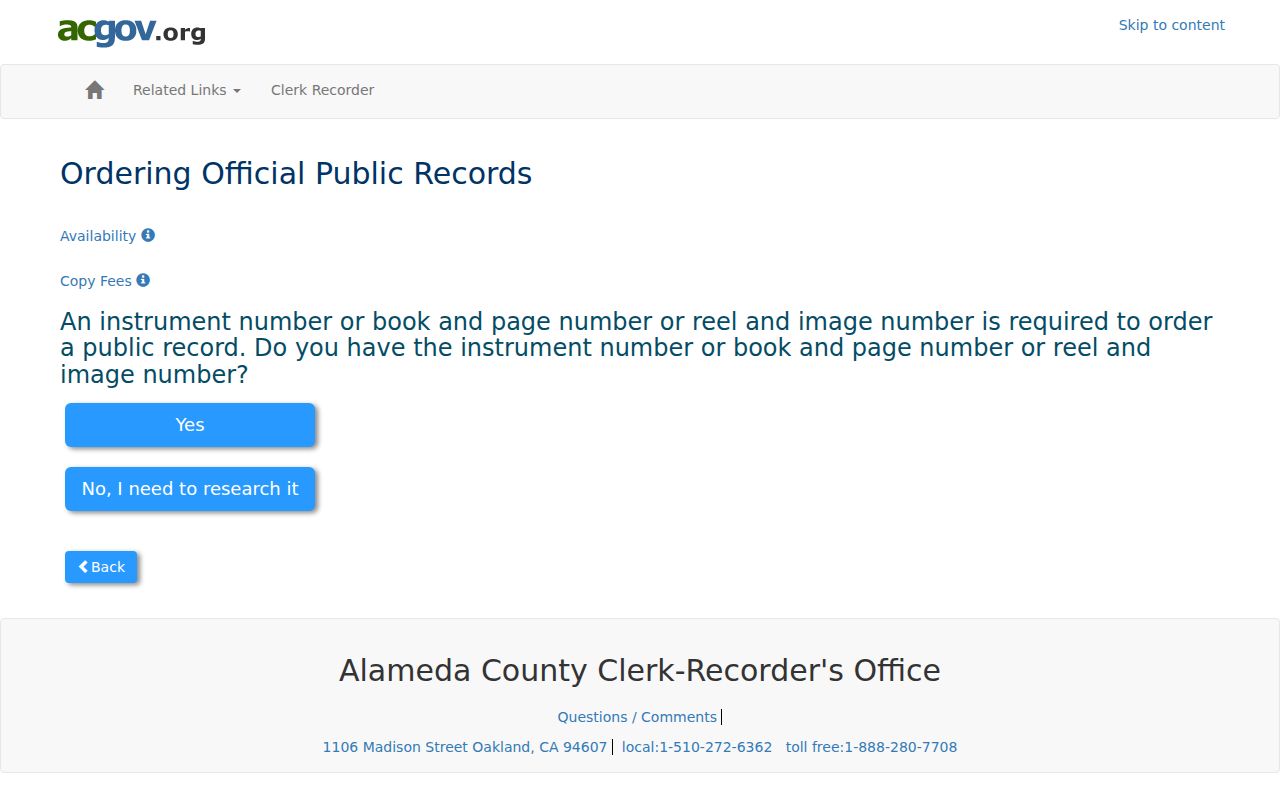
Use the index as a map to the document. The deed image and the legal description are stronger evidence than a name-only result.
A Berkeley Voter Lookup Has a Narrow Door
California My Voter Status is not a public Berkeley residents directory. It asks for first name, last name, date of birth, and either California driver license or identification details or the last four digits of a Social Security number. A successful self-lookup can show registration status and address, party preference, polling place, election information, vote-by-mail or provisional status, participation history, and guide preference.
That authentication protects the basic distinction between checking one’s own record and browsing other people. California Elections Code section 2194 and Government Code section 7924.000 restrict voter data. Qualified election, scholarly, journalistic, political, and governmental users may apply for a file, but the application requires a purpose, scope, delivery method, acknowledgments, wet signature, photo identification, and a fee. Commercial solicitation, harassment, and fraud are prohibited. The public status page cannot enumerate Berkeley voters by name or street.
The voter-status form shows why a voter result is a verification step, not a neighborhood roster. Wait 24 hours after a new online registration before expecting the status to update.
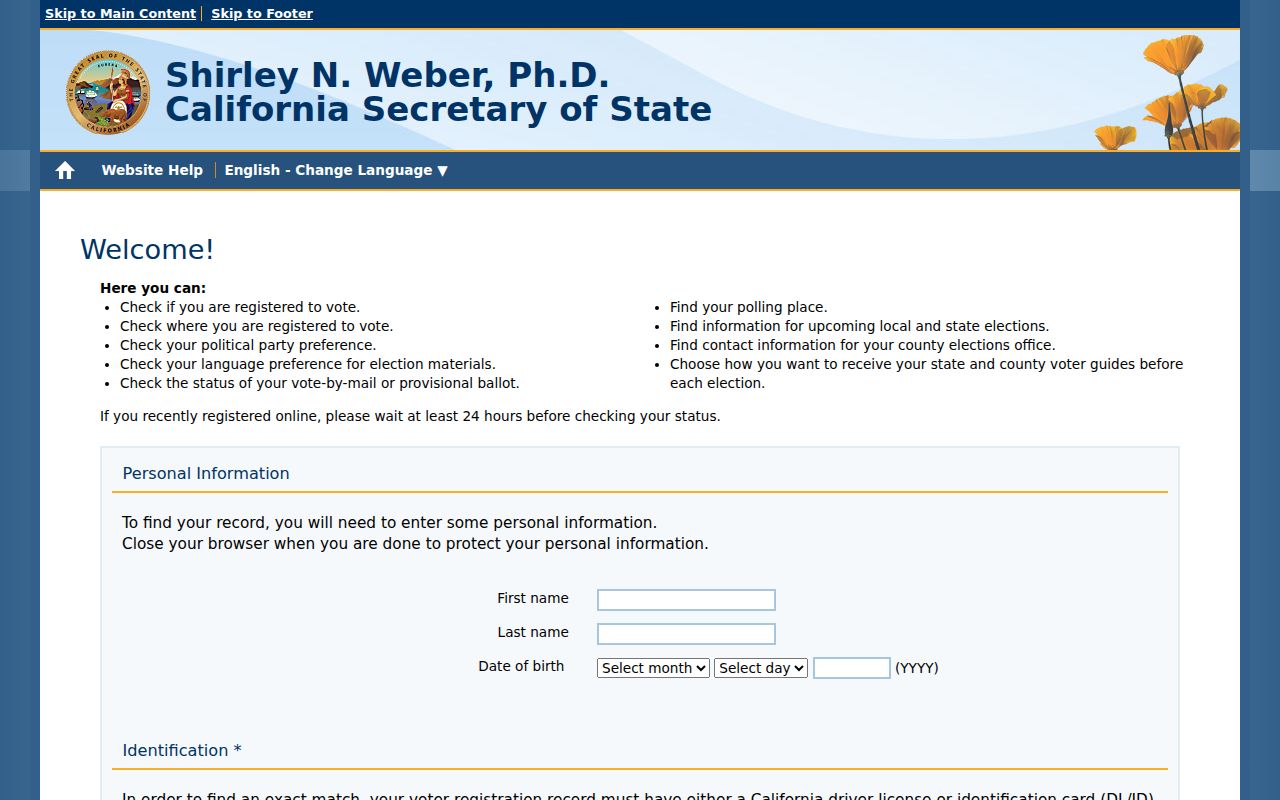
The form’s fields are useful for a person checking their own record, while a different source is needed for lawful historical or address research.
Present-Day Berkeley Resident Sources
Current Berkeley resident directories are better understood as purpose-built source sets. The assessor and tax systems offer property facts. The recorder offers parties to recorded documents. The city’s active-license data shows business registrations, not residence. The state supplies self-authenticated voter status, professional-license records, and entity filings. Each source has a different access rule and a different risk of confusing an affiliation with a home.
| Source | What It Lists | Keeper | Access |
|---|---|---|---|
| Property and tax search | Parcel facts, situs and mailing details | Alameda Assessor / Tax Collector | Free address or APN search |
| Official-record index | Deed and lien parties | Alameda Clerk-Recorder | 1969-present online; older microfilm |
| My Voter Status | One person’s authenticated status | California Secretary of State | Self-lookup only |
| City active licenses | Business and location registrations | City of Berkeley | Open Data list or download |
| DCA and business files | Professional or entity affiliations | California regulators | Free metadata searches |
A city staff entry, chamber membership, professional license, or business filing can explain why a name appears in Berkeley without proving residence. Berkeley business-license material also warns that business email addresses are public. Use the Berkeley resident lookup workflow when one person must be verified across more than one independent source.
One Person, Two Berkeley Matches
A reliable Berkeley residents directory result usually needs two independent matches. Preserve middle initials, suffixes, alternate spellings, spouse names, dates, and any address clue. Then separate the owner, tax-mail recipient, directory subscriber, and occupant roles. The property portal may point to the right parcel. A deed may confirm the owner. A directory or census may connect a person to the address during a particular year.
For a common name, require a second fact before calling the records the same person. A business or professional file can contribute a license number, entity number, practice location, or filing date. A court record can add a case number and party name. An obituary can add relatives or a death date. A “no match” may instead reflect a spelling variant, a restricted record, a source gap, or a person who was never represented in that collection.
| Source kind | Strength | Limit |
|---|---|---|
| Official parcel, deed, court, or vital record | Named custodian, defined fields, traceable access | May be restricted, delayed, fee-based, or split across offices |
| Library directory, census, yearbook, or obituary | Dated context and household clues | Coverage gaps, listed roles, and historical spelling changes |
| Commercial people-search compilation | May gather several public-source leads in one interface | Can merge names, lag behind corrections, and lacks custodian authority |
Identity check. An address, date, APN, case number, yearbook year, or document number is a stronger anchor than a shared name alone.
Berkeley Court Records by Case Type
The Superior Court of California, County of Alameda, handles Berkeley cases. The eCourt Public Portal covers civil, family law, probate, mental health, and adoption functions, but every function requires account registration. Search results can show case and party information. The document area provides a half-page preview, while downloading or printing documents carries charges. Exact party-search fields and prices were not exposed outside the account-gated interface.
Access changes with the case type. Nonconfidential criminal documents use a Criminal Record Request route. Mail searches and public civil terminals at the Rene C. Davidson Courthouse provide alternatives. Family-law documents are not remotely online. Probate images are generally available for filings after January 31, 2006, with exceptions for conservatorship, guardianship, and confidential material. Adoption records require a court order, and juvenile access uses a JV-570 petition under Welfare and Institutions Code section 827.
For federal matters, the Northern District of California uses PACER, with current search and page charges. Sealed cases and protected personal identifiers remain unavailable. A Berkeley courthouse label should not be mistaken for a separate municipal court, because Berkeley is a county Superior Court location.
Berkeley Birth, Death, and Marriage Records
Vital records require the right custodian and copy type. Alameda County Clerk-Recorder handles county events, while California Department of Public Health Vital Records provides a statewide channel. An informational birth, death, or public-marriage copy carries a notice that it cannot establish identity. An authorized copy can establish identity, but the requester must meet the qualifying relationship or status rules and submit a notarized sworn statement when required.
California has permanent statewide birth records from July 1905, yet older family research also uses Alameda marriage microfilm from 1854 to 1955, newspapers, probate, church registers, cemeteries, and the California Death Index. There is no simple statewide “open after N years” rule for every modern vital record. Adoption and confidential marriage records have narrower access.
The Berkeley History Room Offline Directory
The Berkeley Public Library Central History Room is the city’s strongest offline residents directory resource. It sits in the second-floor Historic Reading Room at 2090 Kittredge Street. Public hours are Wednesday from 10 to 1, with appointments outside those hours through (510) 981-6100. The noncirculating collection includes directories, reverse directories, telephone books, maps, Sanborn sheets, city documents, photographs, yearbooks, Gazette microfilm from 1894 to 1984, and clippings from 1920 to 2005.
The Library’s Berkeley History Room page is an access point, not a substitute for reading the volume. Directory research benefits from staff help, especially when a volume interfiles Berkeley with Oakland or points to an institutional section. The room also holds the California Death Index 1940-1997 and supports house-history work. That combination lets a past resident trail move from a name to an address, then from the address to a newspaper or map.
The Berkeley City Clerk department information shows the municipal office that sits beside the offline library shelf.
Bring the exact name, approximate year, and street clue when possible. A librarian can help choose a directory, reverse volume, obituary index, or map before the search becomes a stack of unrelated books.
Historical Berkeley Resident Directories
Berkeley’s historical residents directory trail begins before city incorporation. East Bay and Berkeley volumes include 1867, 1869, 1874, 1875, 1876-77, 1877-78, 1880-81, 1884-85, 1887, 1889-90, 1892-93, 1903, 1908-18, 1921, 1923-28, 1930, 1933-35, 1937-41, and 1943. Langley, Stilwell, Bishop, Polk-Husted, Husted, and R.L. Polk account for the documented runs. From 1923 forward, Berkeley may be interfiled with Oakland. Linked 1967 and 1969 volumes are Oakland only, a local catalog trap.
Reverse directories add a different angle. PT&T volumes from 1938, 1940, and 1944 move from address to subscriber. Later reverse directories cover 1981 to the present, with some 1960s and 1970s holdings at the Berkeley Historical Society. The full collection and reading method belong on the Berkeley city directory collections page, while the central lesson is simple: directory evidence is a dated listing, not a complete household roll.
- Roll
- A record set organized around a category, such as property or registered voters.
- Index
- A finding aid that points to a document; it is not always the document image.
- Parcel
- A mapped unit of land identified by an APN, with facts that may connect to deeds and permits.
- Criss-cross directory
- An address-order or street-order directory that can lead from a place to a listed subscriber.
When a directory year disappears, check whether the person moved, died, changed initials, was unlisted, or appears under an Oakland-Berkeley heading. Pairing directory years with census schedules, yearbooks, obituaries, and Sanborn maps is more reliable than treating one blank line as proof of departure.
Protected Berkeley Addresses and Opt-Outs
Some Berkeley residents are intentionally harder to locate. California’s Safe at Home program can provide qualifying survivors and threatened persons with a substitute mailing address, confidential voter registration, mail forwarding, and certain name, DMV, and property protections. It does not automatically erase older deeds, parcel records, court material, or directory pages. A missing name can therefore reflect a protection program rather than a missing person.
The California Consumer Privacy Act gives rights to know, access, delete subject to exceptions, correct, opt out of sale or sharing, and limit sensitive-data use. Global Privacy Control is recognized as a signal. Since January 2026, the state’s DROP platform gives Californians one encrypted request for registered data brokers, with broker processing beginning August 1, 2026. Deleting a commercial profile does not rewrite a Berkeley deed, voter source, parcel, or court record.
Safe at Home explains the protective route, while California DROP addresses broker copies. Neither is a public residents directory, and neither should be treated as a way to override a custodian’s rules.
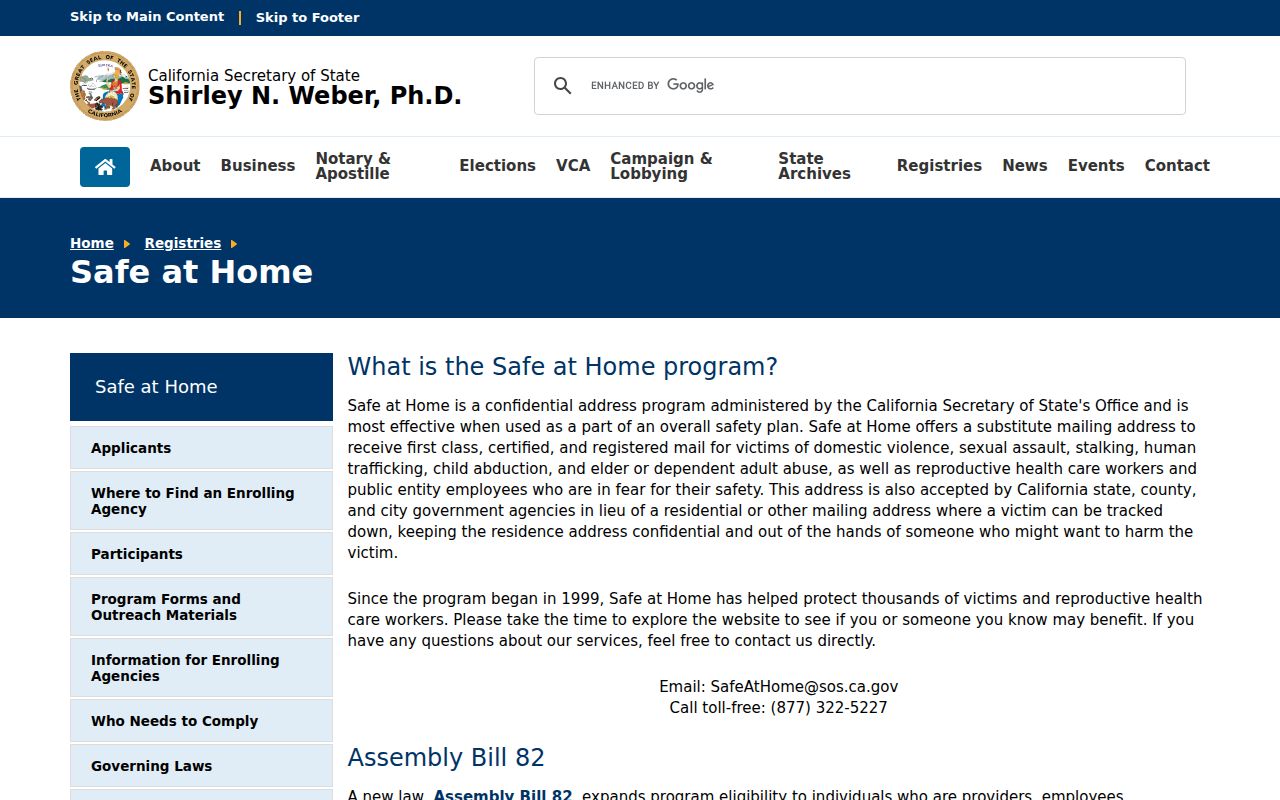
Privacy choices change what a lawful search can show. Respect the protected address and use the official contact route for a record correction or safety concern.
Lawful use. Berkeley records are for personal, lawful research and civic understanding. Do not use a name, address, or record trail to stalk, harass, intimidate, or harm anyone.
Berkeley Business and License Clues
Business and professional databases can help explain a Berkeley name, but they are affiliation sources rather than resident rolls. California’s DCA license search accepts board, license type, number, business, and first or last name fields, with filters for city, county, status, and discipline. The ABC lookup accepts license number, licensee, address, city, and DBA, and can report by city or ZIP. A license may locate a practice or business relationship without identifying a home.
The Secretary of State’s bizfile Online search works with an entity name or file number and advanced filters for entity type, status, date, and public-company status. Results can expose entity data and recent Statements of Information or filings, while transaction features may require an account. The search removes the “C” from an entity number during keyword search, so the advanced field can be more precise than a copied string.
The California DCA license search is useful when a name needs a license number or issuing board.
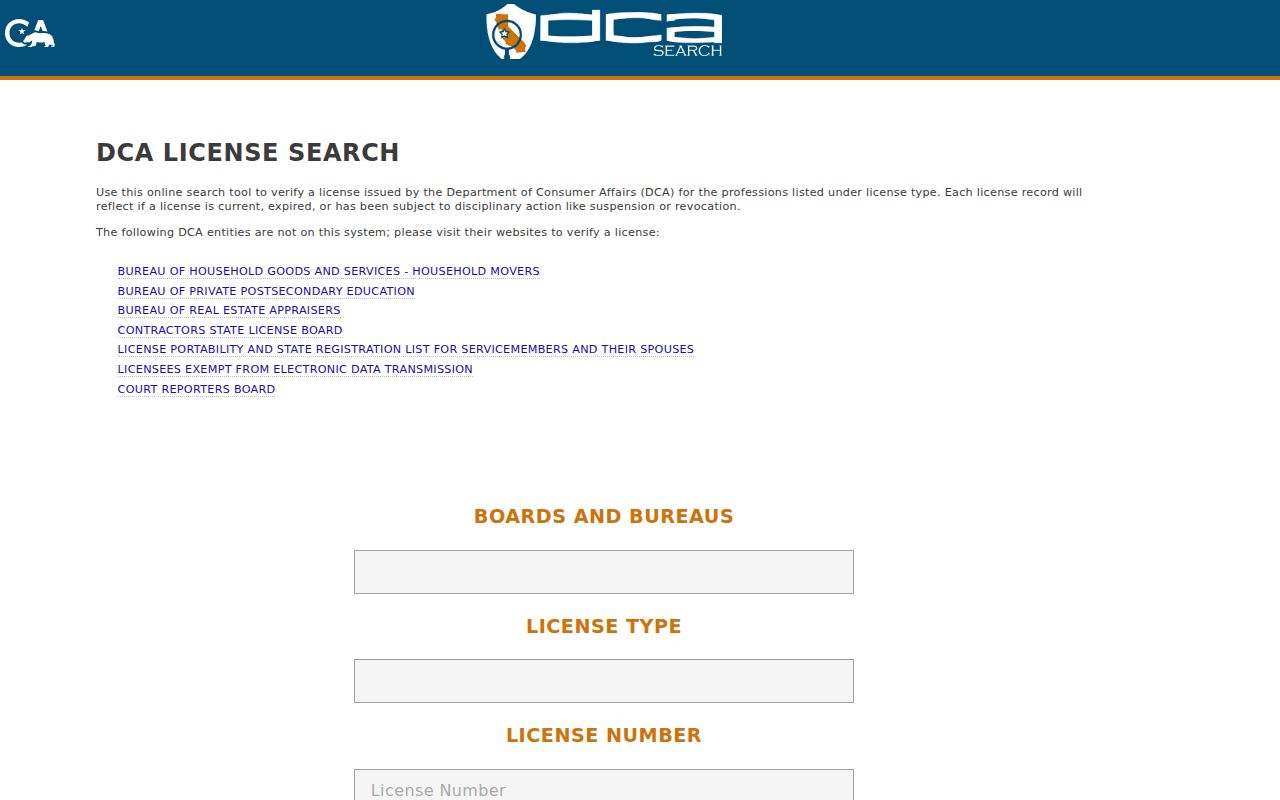
Read the issuing regulator’s result as one independent match. It becomes stronger when the name, city, date, and address lead agree with a separate record.
California bizfile Online adds entity and filing metadata when a Berkeley name is tied to a business record.
Entity filings can support an affiliation match, but a filing address should remain distinct from a residential address.
Berkeley Record Fees and Scam Signals
Official fees help distinguish a custodian from a solicitation. Berkeley city records review is free, and standard paper copies cost 10 cents single-sided or 20 cents double-sided. A city disclosure determination generally arrives within 10 days, with a possible 14-day extension. Requests can go through NextRequest, the City Clerk, mail, or in person, and an anonymous requester can receive the records but not account updates.
Common scams use real-record topics. Watch for inflated deed-copy offers, paid property-fraud anxiety mailers, upfront-fee unclaimed-property promises, jury-duty arrest threats, and impostor messages built from obituary facts. Navigate independently to the custodian’s government site, compare the listed fee, and call the published office number. Preserve the envelope, caller ID, receipt, URL, or screenshot if a complaint is needed.
California Public Records Act guidance explains that agencies generally determine disclosure within 10 days, may extend by 14 days, and can charge direct duplication costs. Berkeley’s public-records page gives the city-specific request channels.
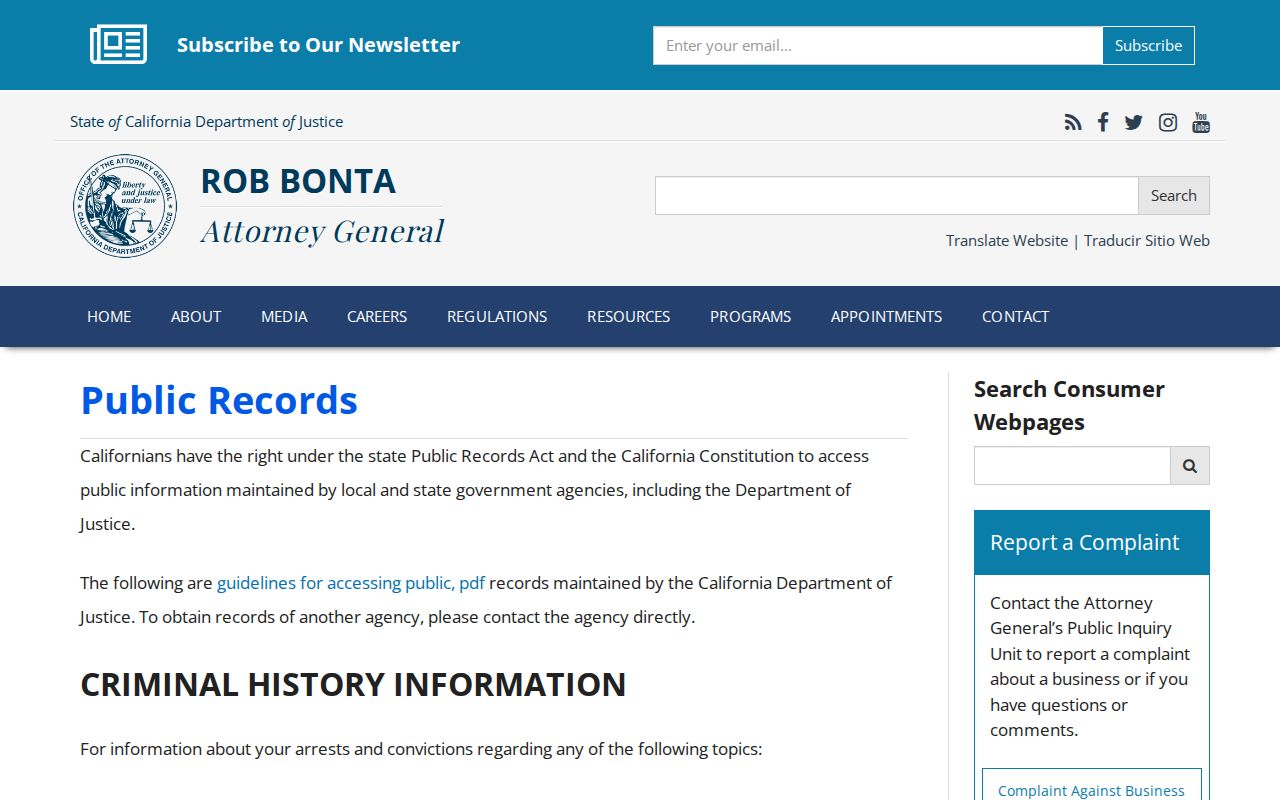
The public-records route is slower than a search box, but it is the right fallback when the record is held by the city and is not already online.
Berkeley’s Directory Trail Is Layered
A final Berkeley residents directory search is strongest when it preserves four separate clocks: the deed owner, the directory subscriber, the census household, and the physical structure shown on a Sanborn map. Berkeley’s growth from 5,101 residents in 1890 to 122,580 in 2020 changed streets, subdivisions, unit labels, and the density of the records. A person can disappear from one clock while remaining visible in another.
The next move depends on the question. For one named person, keep the identity anchors and use independent matches. For an address, preserve the APN and legal description before following a deed chain. For a historical household, use the library shelf, census, obituary index, yearbook, and map together. For a ZIP, remember that postal geography crosses city and county lines. This layered method keeps Berkeley’s official records, public directories, and historical sources in their proper roles.
Note: Validate the clue, choose the custodian, record the date and access limit, then confirm the result with a second source.